

I was at a cars and coffee event last fall when a guy walked up to me with a Porsche 911 that looked flawless from twenty feet. Midnight blue. Glossy. The kind of car you’d expect to see on a showroom floor. He was proud of the paint protection film he’d had installed six months earlier. “Full front end,” he said. “XPEL. Cost me three grand.” I nodded, walked around to the passenger side, and ran my finger along the edge of the film where it wrapped around the wheel arch. Something felt wrong. The edge was slightly lifted. I pressed it down, and a thin line of brown liquid oozed out. It smelled like rust and dirt. He looked at my finger, then at his perfect Porsche, and his face went pale. That $3,000 wrap was holding salt and moisture against his paint like a wet blanket on bare metal. The rust was already starting.
Let me be very clear about something. Paint protection film and vinyl wraps are not inherently bad. When installed correctly by someone who gives a damn, they do exactly what they promise. They protect the paint from rock chips, road salt, and the general abuse of daily driving. But the installation is everything. And the market is flooded with shops that will slap film on a car in four hours, use pre-cut templates that leave exposed edges everywhere, and send you on your way with a warranty that they’ll never honor. What they don’t tell you is that if water, road salt, or even just humid air gets under that film, it stays there. It doesn’t evaporate. It doesn’t dry out. It sits against your paint for months or years, slowly doing what moisture does best: eating metal.
I’ve seen this destroy cars in both of the environments that matter. In the Southeast, where humidity is a lifestyle, I pulled a full hood wrap off a three-year-old Honda Civic last year. The paint underneath looked like it had leprosy. Little bubbles of rust forming along every edge where the film had lifted. The owner thought he was protecting his resale value. Instead, he was financing a rust repair bill that exceeded what the wrap cost. Up north, it’s even worse. You drive a Subaru Outback through a Vermont winter, the roads are caked with calcium chloride and salt brine, and that brine finds its way under the edges of your film. Then spring comes. The car sits in the sun. The salt brine evaporates, but the salt stays. Concentrated. Eating the paint and the metal beneath it. By the time you notice the bubbling under the film, the damage is already through the clear coat, through the base coat, and into the substrate.
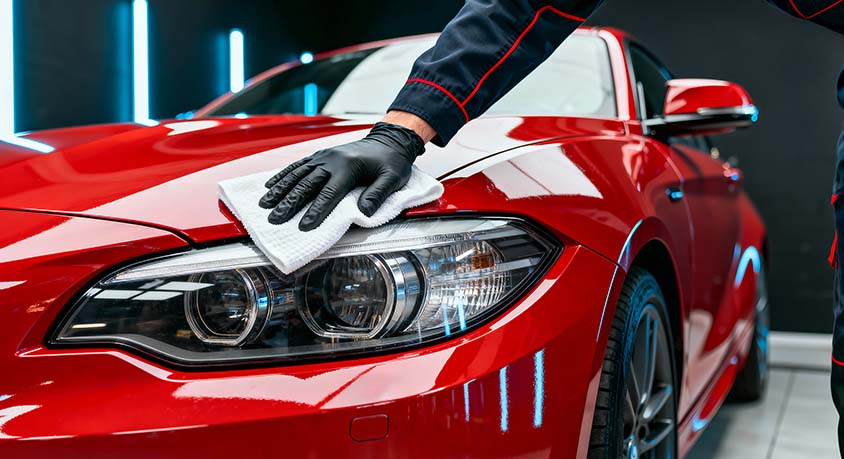
The sensory signs are subtle if you’re not looking. The first thing I do on any wrapped car is run my hand along the edges. A proper install feels seamless. The edge is either tucked behind a panel or so perfectly flush that you can’t catch a fingernail on it. A bad install feels like a sticker. You can feel the ridge. You can catch the edge. And if you catch it, moisture has already found it. Then there’s the feel of the film itself. Press on it. Does it feel tight to the paint, or does it have a slight give? If it feels loose, there’s air and moisture underneath. That’s a breathing space for rust. And the smell? If you can lift a corner and smell anything earthy or metallic, the clock is already ticking.
I’m not saying you shouldn’t protect your car. I’m saying you need to understand the difference between protection and a trap. A properly installed full-body wrap on a Tesla Model 3, with edges tucked behind trim pieces and wrapped around panels, will do its job. But Tesla owners are the worst offenders when it comes to this. They want the car to look perfect, so they take it to the cheapest shop that promises “paint correction and full PPF” for $2,500. That car will look great for six months. Then the edges will start to collect grime. Then the grime will hold moisture. And by year three, that pristine white Tesla will have yellowing film and rust spots hidden beneath the surface that the owner won’t see until they try to sell it and a buyer like me runs a fingernail along the edge.
Compare that to a Mazda CX-5 or a Toyota Tacoma with a proper ceramic coating instead of film. A ceramic coating doesn’t trap moisture. It bonds to the paint and lets the surface breathe. It doesn’t offer the same rock chip protection, but it also doesn’t create a sealed environment where salt water can sit for months. Or look at a Ford F-150 with a factory paint job that’s been properly waxed and maintained. It’ll show chips and scratches, sure. But you can see the damage. You can address it. With a bad wrap job, the damage is invisible until it’s catastrophic.
Here’s what I do, and what you should do if you actually care about your paint. If you’re getting PPF installed, ask the shop how they handle edges. If they say “we use pre-cut templates,” walk out. A template leaves exposed edges everywhere. A proper shop hand-cuts the film, wraps it around every edge, and tucks it behind panels. It takes longer and costs more, but it seals the paint. Second, check the work yourself. Run your fingernail along every edge the day you pick the car up. If you can catch a ridge, reject it. Third, if you already have film on your car, inspect it every season. Look for lifting edges. Look for discoloration. Look for that dark line of trapped dirt that means moisture is getting in.
I’ve seen $80,000 cars ruined by $3,000 wraps. The guy with the Porsche eventually peeled the film off and found rust forming on the leading edge of both front fenders. He paid another $2,500 to have the fenders repainted and learned a lesson that the film industry doesn’t want you to know. A wrap is only as good as the installation. And a bad installation isn’t protection. It’s a time-release corrosive. The next time you see a car with a pristine wrap, don’t admire the shine. Run your hand along the edge. If you feel a ridge, you’re looking at a future rust repair.
Disclaimer: Mention of any brand or trademark is for identification purposes only and does not indicate any partnership or endorsement.
