

Picture this: You just spent the last forty minutes carving up a canyon road or pushing your Ford EcoBoost through a blistering July headwind on the I-95. You pull into your driveway, feeling like a local legend, and you flick the ignition off before the seatbelt chime even stops. You think you’re being efficient, but in reality, you just handed a death sentence to the most expensive component under your hood. You’re not just turning off an engine; you’re effectively deep-frying a three-thousand-dollar piece of precision Swiss-watch engineering in its own juices. It is the mechanical equivalent of running a marathon in Death Valley and then immediately jumping into a freezer without catching your breath. Your heart might stop, and eventually, so will your turbo.
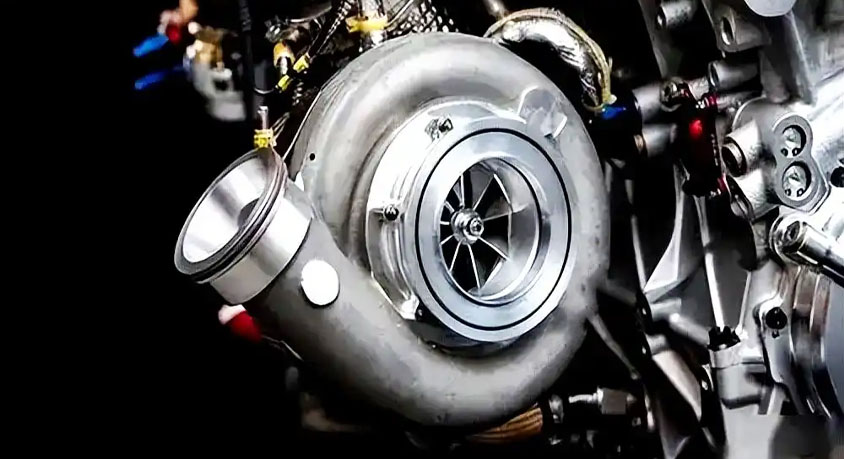
I’ve spent two decades at Car and Driver listening to PR flacks tell me that "modern engineering" has solved every problem known to man. They’ll point to electric water pumps and fancy thermal management systems and tell you that "turbo coking" is a ghost story from the 1980s. They are lying to you. While a modern Honda Civic or a Volkswagen GTI is lightyears ahead of an old Saab 900, the laws of physics haven't changed. A turbocharger spins at upwards of 200,000 RPM—that is faster than a dentist’s drill and significantly hotter than the surface of a cast-iron skillet. When you kill the engine the second you stop, the oil flow stops too. That stagnant oil sits inside a red-hot bearing housing, stops being a lubricant, and starts becoming a crusty, black charcoal known as coke.
Think of your engine oil like the blood in your veins. Its job isn't just to make things slippery; it’s to carry heat away from the fire. When you are on the boost, the exhaust gas side of that turbo is glowing like a cheap cigar. If you cut the circulation, that heat has nowhere to go but into the tiny pool of oil trapped in the bearing. Over months of "quick shut-offs," those microscopic carbon flakes build up like plaque in an artery. Eventually, the oil passages choke, the bearings seize, and you get to enjoy the lovely sound of a dying turbo—a high-pitched, metallic shriek that sounds like a circular saw hitting a nail. It’s a sound that should make any self-respecting enthusiast weep, mostly because of the impending credit card debt.
I absolutely loathe the current trend of "Auto Start-Stop" technology for exactly this reason. I don't care if it saves me 0.2 miles per gallon during a Starbucks run; it is an affront to mechanical longevity. You pull off a high-speed highway into a gas station, and the car decides to kill the engine before the turbo has even had a chance to exhale. It’s a mindless feature designed by accountants to appease the EPA, not by engineers who want your car to last 200,000 miles. Every time I get into a new test car with that "Feature," the first thing I do is find the button to kill it. It feels like a cheap, mushy plastic toy—nothing like the satisfying, heavy mechanical click of a 1990s BMW switch—but pressing it is a mandatory ritual for anyone who actually gives a damn about their hardware.
The "cold start" gets all the glory in the car world. People obsess over letting their cars warm up in the driveway, which, frankly, is mostly a waste of time unless you’re living in the Yukon. Modern synthetics flow just fine at freezing temperatures. The real danger is the "hot stop." If you’ve been doing anything more strenuous than crawling through a school zone at 15 mph, your turbo needs a cooldown. You don't need a fancy aftermarket turbo timer that keeps the car running while you walk away like some street-racing extra from a bad movie. You just need sixty seconds of patience. Use that minute to check your mirrors, unbuckle, and find your phone. That sixty seconds of idling allows the oil to circulate, pulling the peak heat away from the turbine and dropping the internal temperatures to a safe "rest" state.
When you compare a turbo-four to a naturally aspirated engine, like comparing the punchy turbo in a Subaru WRX to the linear, old-school V6 in a Toyota Camry, the trade-off is clear. The Subaru gives you that addictive surge of torque that feels like a giant hand pushing you into the seat, but it demands more respect. The Camry is a toaster; you can treat it like garbage and it will still start in ten years. The turbo car is a high-performance athlete. If you treat a WRX like a Camry, you are going to have a very bad time. The Subaru’s steering might feel like a direct connection to the asphalt—heavy, communicative, and alive—compared to the Camry’s "numb-as-Novocaine" rack, but that engagement comes with a responsibility to the machinery.
We live in an era where cars are treated like disposable iPhones. The manufacturers want you to trade your car in the moment the lease is up, so they don't care if your turbo bearings are toast at 80,000 miles. But if you're the kind of person who spends their Saturday mornings with grease under their fingernails, you know better. You know that the smell of hot, hard-worked machinery is a reward, but it’s also a warning. When you pull into your driveway after a spirited run, listen to the car. You’ll hear the pinging of the cooling metal and the faint whir of the fans. Give it that minute. Let the oil do its job. It’s the easiest maintenance you’ll ever do, and it beats the hell out of spending three grand on a new Garrett unit because you couldn't wait sixty seconds to go inside and eat dinner.
Disclaimer: Mention of any brand or trademark is for identification purposes only and does not indicate any partnership or endorsement.
