

Park a 2026 4Runner next to a 2010 model and the family resemblance is unmistakable—the chiseled shoulders, the upright greenhouse, the stance that says "I'd rather be in Moab than at the mall." But pop the hood, and the philosophical divide becomes stark. For fifteen years, American buyers worshiped at the altar of the 4.0-liter V6, a powerplant so indestructible it felt like it could outlast civilization itself. Now that engine is gone, replaced by a 2.4-liter turbocharged four-cylinder. The internet forums are already on fire with predictions of premature failure and lost souls. To understand whether the new 4Runner deserves to wear the "bulletproof" crown, we spent a week punishing it across the kind terrain that built its legend, from high-speed desert washboards to technical rock crawls that test every electronic brain cell.
Let's start with the engine that has everyone so worried. The new i-FORCE 2.4-liter turbo produces 278 horsepower and 317 lb.-ft. of torque—a significant bump over the old V6's 270 horses and 278 lb.-ft. The torque peak arrives at just 1,700 rpm, which transforms how the 4Runner feels leaving a stoplight. Where the old V6 needed to be wound up like a winch, the turbo four surges forward with diesel-like immediacy. The 0-60 mph sprint now takes about 7 seconds, nearly two seconds quicker than its predecessor. For those wanting more, the i-FORCE MAX hybrid bumps output to 326 horsepower and a massive 465 lb.-ft. of torque, though it sacrifices some cargo space to the battery pack. The 8-speed automatic transmission finally replaces the aging 5-speed, and the difference in highway refinement is immediate—the engine lopes along at 2,000 rpm at 70 mph rather than screaming near redline.
The reliability question, however, deserves more nuance than forum hysteria. The old 4.0 V6 earned its reputation over millions of miles and two decades. The new turbo four is based on the same architecture Toyota has been refining in the Tacoma and Tundra since 2022, and early data suggests the fundamental engineering is sound. But the physics are different: a turbocharged engine runs hotter, operates under higher cylinder pressures, and introduces additional failure points in the form of wastegates and intercoolers. In Moab's 100-degree heat, working the engine hard on technical trails, the cooling systems kept temperatures stable, and the electric fan pulled serious air when crawling. The real test will come at 200,000 miles, not 20,000. Toyota's decision to retain port injection alongside direct injection on this engine addresses the carbon buildup issues that plagued early direct-injection designs, suggesting they learned from the industry's mistakes.
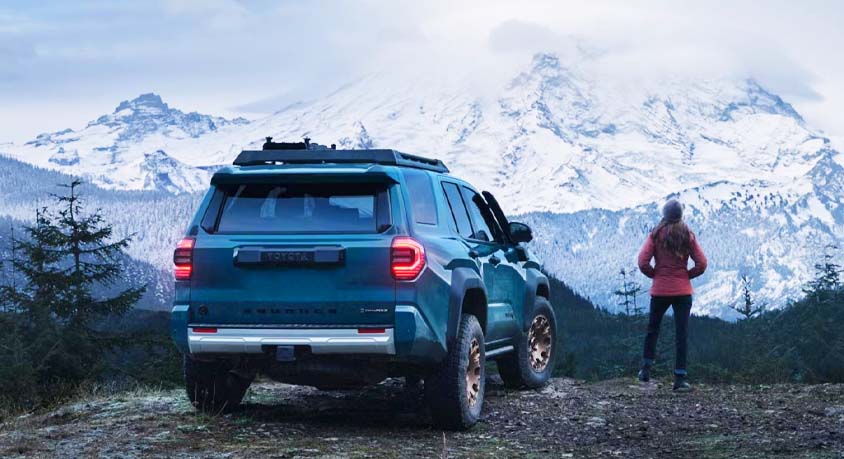
On the trail, the new platform justifies its existence in ways that transcend powertrain anxiety. The TNGA-F chassis, shared with the Tacoma and Land Cruiser, brings a rigidity that completely changes how the 4Runner absorbs punishment. Where the old frame flexed and shuddered over washboard roads, the new structure feels bank-vault solid, allowing the suspension to do its job without fighting chassis twist. The TRD Pro's FOX QS3 adjustable shocks let you dial in compression damping manually, transforming the ride from compliant highway cruiser to high-speed desert runner with a few twists of the knurled adjusters. The stabilizer bar disconnect, now available on more trims, unlocks genuine articulation that lets the front axle droop into holes that would have lifted a tire on the old model. It's the difference between walking a tightrope and having a safety net.
The interior has finally joined the current decade, though not without compromises. The 14-inch touchscreen dominates the dashboard, running Toyota's latest software with wireless Apple CarPlay that actually connects instantly every time. The digital gauge cluster is configurable and crisp, and the availability of a head-up display on higher trims makes navigating technical trails without taking your eyes off the terrain genuinely easier. But the rear seat remains surprisingly cramped—at six-foot-two, I had my knees pressed into the front seatback, and the seat bottom itself feels short and unsupportive for adults. The cargo area, while cavernous in gas models, loses noticeable volume in hybrids due to the battery placement under the floor. And the interior plastics, while rugged and easy to clean, feel conspicuously hard in a vehicle that can crest $60,000.
This brings us to the paradox of the 4Runner's appeal: Americans are willing to wait six months for a vehicle with worse fuel economy, less space, and a harsher ride than almost any crossover because they believe in the long game. The depreciation data supports the faith—after three years, a 4Runner retains over 77 percent of its value, compared to the segment average of around 50 percent. After five years, it's still worth 75 percent of its original price. That's not just resale value; that's a cultural signal that owners expect to hand these trucks down to their children. The question hovering over the 2026 model is whether the added complexity of turbocharging and hybridization will preserve that trajectory or disrupt it. Early signs are encouraging: the powertrain feels robust, the electronics haven't glitched in our testing, and the chassis improvements are objectively superior. But the 4.0 V6's legend was built on surviving abuse that would kill lesser machines—overheating, neglect, cheap fuel, and 300,000 miles of sheer indifference.
The 2026 Toyota 4Runner represents an engineering compromise that would have been unthinkable a decade ago. It's more powerful, more efficient, more comfortable, and more capable than the vehicle it replaces. Yet it asks its buyers to accept a fundamental trade: complexity for performance, electronics for efficiency, turbos for torque. The old 4Runner was a tool you could trust with your life because it had no secrets, no black boxes, no software that could fail. The new one asks you to trust that Toyota's engineers have mastered the same calculus with far more variables. For the hardcore overlanders who view electronic nannies with suspicion, the fifth generation will remain the gold standard. For everyone else—the weekend warriors, the ski trip haulers, the families who want one vehicle to do everything for fifteen years—the 2026 model makes a compelling case.
Disclaimer: Mention of any brand or trademark is for identification purposes only and does not indicate any partnership or endorsement.
